
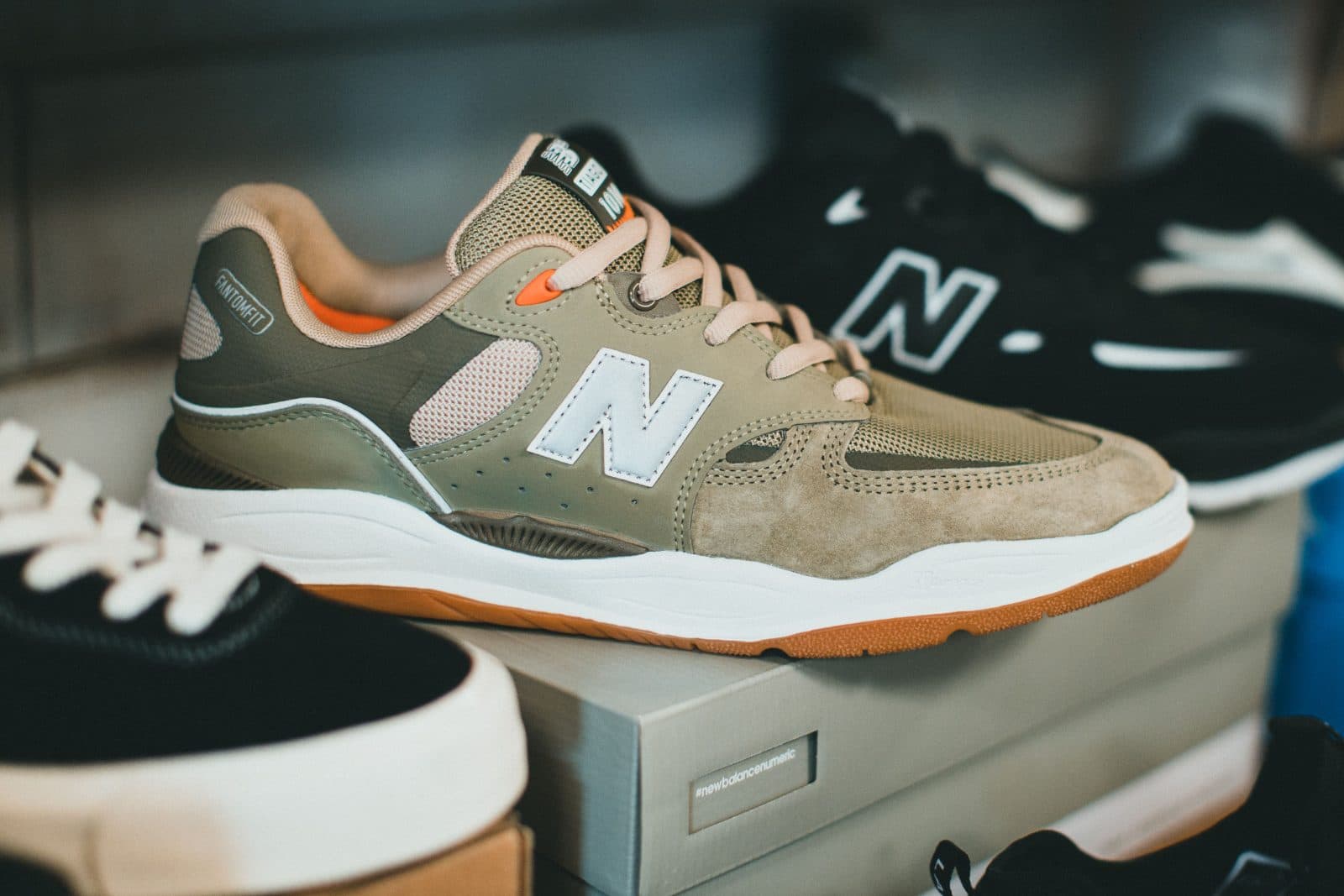
New Balance Ecommerce Case Study: Performance and Consumer Paths
When footwear and sportswear carry proprietary technology, a generic storefront and checkout are not enough. This New Balance ecommerce case study shows how to turn technical product attributes into navigation criteria without sacrificing performance or the marketing team's autonomy.
The New Balance challenge: beyond the traditional ecommerce storefront
New Balance is a global footwear and sportswear brand, and its shoppers do their homework before buying. They want to understand the technology built into the product, know which model fits which sport, and confirm that the shoe actually serves the activity they practice. That kind of deep research makes a bare-bones scalable ecommerce platform for global brands, one that only organizes a catalog by category and price range, fall short. It is a pattern that repeats across sporting goods ecommerce platforms.
The challenge had three dimensions that needed to coexist on the same platform: performance under traffic spikes, navigation built around decision criteria like product technology and sport activity, and enough agility for marketing and IT to plug in new tools. A project like this demands a partner with a proven track record with global brands, and that track record is what shows up in Agence's client testimonials.
Performance under pressure
Infrastructure sized to sustain digital retail traffic spikes without losing browsing or checkout speed.
Navigation by technical criteria
A catalog organized by product technology, sport activity, and item type, not just category and price.
Agility for marketing and IT
An architecture that lets new tools and platforms plug in without relying on structural rework.
Performance as the foundation: infrastructure for traffic spikes in digital retail
Traffic spikes on a global sports brand's ecommerce site are rarely predictable down to the day, but their causes are well known: the launch of a highly anticipated product, a seasonal campaign tied to retail dates, or a sporting event on the calendar that drives demand for a specific category. For New Balance, every one of these moments needs to find a platform that is ready, not one that buckles under concurrent access.
Agence treated infrastructure as a structural prerequisite of the project, not as an optimization to handle after problems showed up. It built the platform on a system hosting setup sized to keep browsing and checkout speed steady even when access volume multiplies within a few hours. In practice, this architecture decision means planning elastic capacity from the start of the project, calculating peaks of simultaneous access and concurrent checkout before they happen, instead of scaling infrastructure reactively after the platform has already slowed down. It is a choice made at the design stage, not a last-minute fix after the problem has already cost sales.
That is the practical definition of a high performance ecommerce architecture: it does not just load fast under normal conditions, it holds that standard when it matters most. In sporting goods retail, where competing brands invest heavily in digital, a shopper who waits longer than they think reasonable is already comparing alternatives in another browser tab. Every second of delay weighs more here than it would in a less contested segment.
Consumer paths: how shoppers build their cart by technology, activity, and product type
Consumer paths in ecommerce are navigation routes built around the shopper's own decision criteria, not just the catalog's internal structure. Instead of asking only which category a product belongs to, New Balance's platform effectively asks what that product needs to do for the shopper. Product-based navigation, for instance, lets an experienced runner go straight to models with a certain cushioning level, without having to decode line names or internal catalog codes. This is the logic reversal behind the second pillar of the case.
- Footwear or apparel type: the shopper filters first by the product format they already know they need.
- Built-in technology: cushioning, stability, breathability and other technical attributes that set one model apart from another.
- Sport activity: running, training or lifestyle, working as the lens that organizes the entire search.
Translating a product's technical value into a navigation criterion is what turns a catalog into an intuitive purchase journey.
This structure solves a problem most technical ecommerce ignores: expecting shoppers to already know the product jargon before they even start browsing. By letting them build their cart around technology, sport activity, or product type, the platform closes the gap between what New Balance knows about its products and what shoppers know about what they need. It also lowers the chance of dropping off on the first screen, since shoppers quickly find a relevant path instead of relying on imprecise text searches.
There is an important difference between two types of personalization. One relies on browsing history and tries to guess what shoppers want based on what they clicked before. The other, used in this case, starts from a self-declared, real technical criterion: shoppers say themselves that they run, that they need stability, or that they are looking for an everyday sneaker. This second model is what underlies a more precise personalized shopping experience in ecommerce, because it does not depend on statistical inference about past behavior, but on the intent declared at the moment of purchase.
Architecture built for evolution: marketing and IT autonomy for new integrations
The third pillar of the New Balance case answers a need that rarely shows up in ecommerce briefs, but that decides the project's success over the medium term: operational autonomy between marketing and IT. Global brands like New Balance run campaigns that change from market to market, adopt marketing tools that rise and fall out of favor, and need integrations live within weeks, not months. If every new tool requires rebuilding part of the system, the platform becomes a bottleneck instead of an accelerator.
A scalable ecommerce architecture solves this at the root: it absorbs new integrations as an extension of what already exists, not as a months-long side project. This kind of architecture reduced New Balance's reliance on long development cycles for every new digital need, backed by web development work built to evolve. In practice, this means a new advertising tool, a new CRM, or a personalization feature can enter the environment without forcing the IT team to stop everything and rewrite existing integrations, an approach known as headless ecommerce for retail brands.
Anyone weighing this kind of architecture decision for their own brand usually wants to talk directly with a team that has already solved this problem, before committing to a full rebuild.
Why ecommerce for technical products needs a different navigation model
The reasoning behind the New Balance case is not exclusive to footwear and sportswear. Any product whose technical attributes need translation for the end shopper faces the same problem: technical apparel with performance fabrics, beauty products with specific active ingredients and formulations, sports equipment with specifications that only make sense to someone who already knows the topic. In these industries, an ecommerce site organized only by category and price leaves the burden of explaining the product entirely to a spec sheet that few people read to the end.
| Dimension | Traditional ecommerce | Driven by technical criteria |
|---|---|---|
| Navigation | Category and price range | Technology, activity and product purpose |
| Product content | Isolated spec sheet, rarely read | Attributes translated into search filters |
| Personalization | Based on browsing history | Based on shopper self-declared criteria |
| Architecture | Integrations via one-off projects | Continuous modular integrations |
This kind of architecture, driven by business criteria rather than a generic catalog pattern, also shows up outside of retail. The commercial portal Agence built for Ferring organized order tracking and customer records around pharmaceutical business logic, instead of replicating an off-the-shelf B2B ecommerce model.
- ✓Map your shoppers' real decision criteria before designing any filter.
- ✓Check whether your current architecture supports modular integrations without relying on structural rework.
- ✓Test performance under a simulated demand peak, not just under normal traffic conditions.
- ✓Look at your vendor's delivery track record on projects of a similar scale to yours.
The second point on that checklist deserves a closer look. Checking whether your architecture supports modular integrations, in practice, means testing whether you can connect a new marketing automation tool without touching the core of your checkout or catalog. If every new tool requires changing core platform code, the model is not modular. It is only flexible on the surface.
FAQ about ecommerce driven by consumer paths
What are consumer paths in an ecommerce platform?
They are navigation routes built around the shopper's own decision criteria, such as product technology or activity of use, instead of just category and price. In the New Balance ecommerce case study, that means letting shoppers build their cart by cushioning, stability, or sport activity.
How do you structure an ecommerce platform for technical products like footwear and sportswear?
The starting point is mapping the attributes that actually drive the purchase decision, not the ones the company finds easiest to display. Those attributes then need to become navigation filters, not just text on a product page.
What is the difference between traditional ecommerce and product-based navigation ecommerce?
Traditional ecommerce organizes the catalog by category and price, leaving the technical translation of the product up to shoppers themselves. Product-based navigation turns technology, activity, and purpose into search filters, narrowing the gap between what the brand knows and what you need to know to decide.
How do you guarantee performance and availability on large-scale ecommerce platforms?
Performance needs to be treated as an architecture prerequisite, not a later adjustment. That means sizing infrastructure for expected traffic peaks, not historical average access, and testing how the platform behaves under real concurrent usage.
How do you handle marketing tools integration in ecommerce without structural rework?
The answer lies in the architecture, not the tool itself. A platform with modular integrations absorbs a new marketing tool as an extension of what already exists, without forcing the IT team to rebuild parts of the system for every new digital need.
Take your ecommerce project further with Agence
The New Balance ecommerce case study shows that performance, a personalized shopping experience built on consumer paths, and evolving architecture can coexist on the same platform, without sacrificing one pillar for another. Technical retail brands, from sports to beauty, face the same challenge: translating product attributes into a purchase journey without losing speed or the autonomy to add new integrations. If that sounds like where your brand stands, it is worth talking about how to structure or evolve your own platform.